| Reader situation | Topic | Key fact | Planning use |
|---|---|---|---|
| You want the premise quickly | Rendezvous with Rama | 1973 novel, 243 pages; a cylinder 50 km long that spins once every four minutes | A short read, so it suits a weekend rather than a commitment. |
| You want to know what kind of story it is | Plot design | Little overall plot, with the focus on exploration | Read it for discovery and atmosphere, not for twists or a villain. |
| You want the ending | Final outcome | The novel ends still in mystery | Expect no explanation of who built Rama or why. |
| You came from 2001 | Clarke and Kubrick | Book-film collaboration dated to 1964 | Treat Rama as Clarke’s separate take on a silent alien object. |
Figures above come from the SoBrief summary of the novel and the Fantasy Faction review.
Rendezvous with Rama explained in brief: Arthur C. Clarke’s 1973 novel sends a survey crew into a hollow alien cylinder, and it ends still in mystery, so expect exploration rather than answers.
It sits comfortably alongside other science fiction space mystery stories that treat the unknown as the main attraction. The sections below are grouped by what you are trying to find out.
If you are new to the book
What Rendezvous with Rama is about
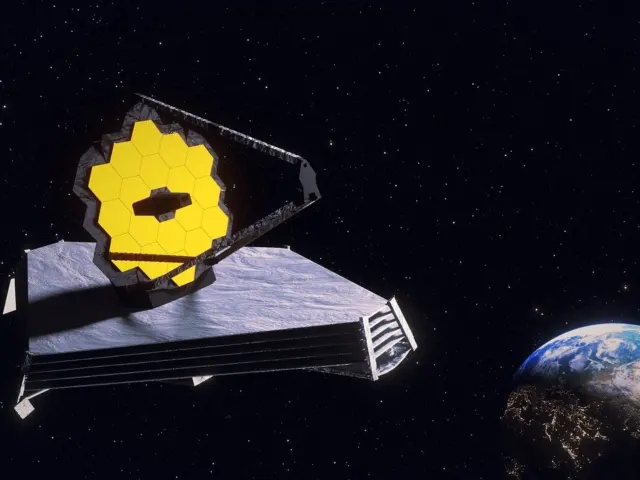
Rendezvous with Rama follows the crew of the survey ship Endeavour, commanded by William Norton, as it investigates a strange object entering the solar system. The story opens in 2077, when a meteorite strikes northern Italy at devastating speed, according to the SoBrief plot summary. That event is what leads humanity to watch the skies more closely, and the object the crew eventually reaches is Rama.
The book is not built like a conventional thriller. A Fantasy Faction review points out that there is little overall plot and that the focus is on exploration. That suits readers who enjoy being shown a place in detail. It is a poor match for anyone who wants a central antagonist or a character-driven arc.

Rama’s size, spin and hollow interior
The plot summary describes Rama as a perfectly smooth cylinder, fifty kilometres long, with flat ends. Measurements show that Rama is hollow, and it spins once every four minutes, as the same SoBrief summary notes. Those three details do most of the work in the setup: a smooth exterior gives the crew nothing obvious to grasp, while the hollow interior and the spin make it clear that this is a constructed object rather than a rock.
- Scale: a 50 km length makes the object far larger than anything the crew could examine in a short visit, which is why the story is organised around exploration.
- Spin: the four-minute rotation gives the visit a built-in sense of motion and urgency without needing any aliens on stage.
- Hollow interior: the discovery that Rama is empty inside is what turns a passing object into a place worth entering.
The book’s recognition matched its reputation. A Strange Horizons book club discussion records that it went on to win the Nebula, Hugo, Locus and BSFA awards. If you want one Clarke novel that explains why he is a fixture of science fiction, those awards are a fair argument for starting here.

If you want the ending
How Rendezvous with Rama ends
Rendezvous with Rama ends without telling the reader what Rama is for. The SoBrief summary says the novel offers no explanation for who built it or why, and the Fantasy Faction reviewer puts it plainly: we end still in mystery, but the journey creates majesty.
That makes the ending easy to describe and easy to misjudge. It is not a cliffhanger set up for a payoff in the same book, and it is not a twist. The humans explore, learn what they can, and the object’s purpose stays out of reach. If an open ending frustrates you, this is the book to approach with adjusted expectations rather than one to skip, because the open ending is the design.
Why the unanswered questions are the design
One reviewer on Evening Bells argues that your impatience to know more, and the questions you cannot answer, are the drama. That is a useful way to read the book. Rama has no speeches and no motive stated by its makers, so the tension comes from the gap between what the crew observes and what they can conclude.
The same collaborative tone runs through the human side. A Strange Horizons reviewer describes the novel as science as a massive collaborative effort, which fits a story where the discoveries belong to a team rather than a lone hero. The practical lesson is to read Rama as a puzzle you are not meant to finish. If you prefer puzzles that resolve, you will get more from stories with a solution at the end.
If you came from 2001
What the monolith in 2001 means
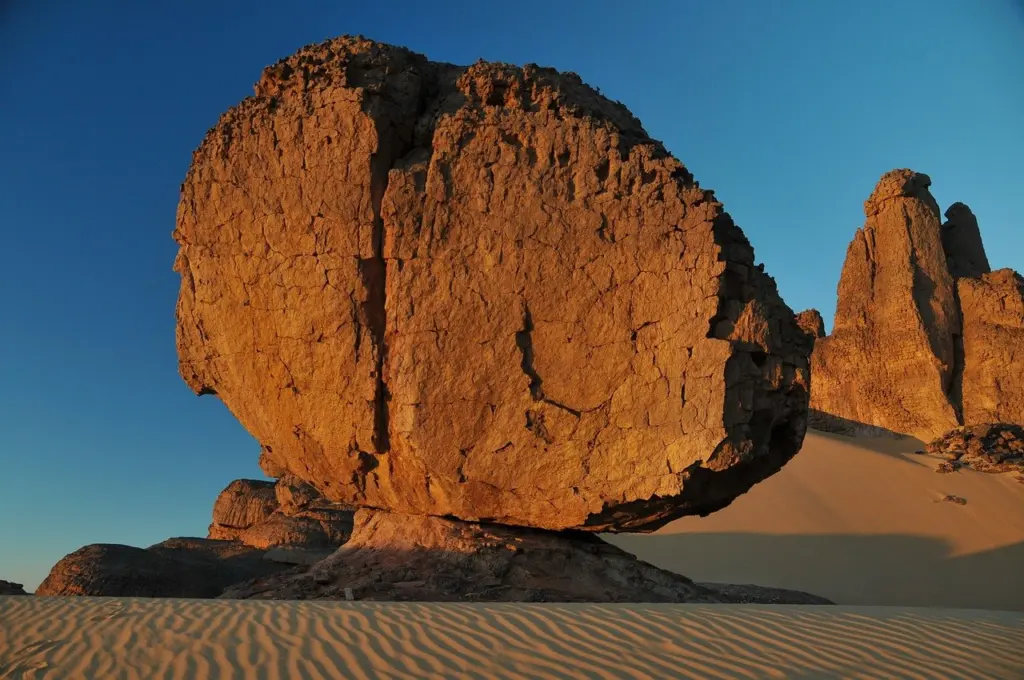
The monolith in 2001: A Space Odyssey has no single stated meaning, and that is deliberate in the same way Rama’s purpose is. The film’s alien makers are never shown. According to the Evening Bells review, Kubrick and Clarke debated how to depict the aliens, sought the help of Carl Sagan, and he wisely suggested they not depict them at all.
The consequence for the monolith is straightforward. With no visible makers to explain it, the object becomes a prompt for the audience to supply its own interpretation. Reading it as a sign of an intelligence beyond human understanding is a reasonable interpretation, but it is an interpretation, not a fact the film confirms. If you want a definitive answer, you will not find one in the film, and arguing for a single correct reading usually misses the point.
Clarke and Kubrick’s collaboration
The Fantasy Faction review dates the book-film collaboration between Clarke and Stanley Kubrick on 2001: A Space Odyssey to 1964. Because the story was developed as both a book and a film, it is worth treating the novel and the film as companions rather than one as a copy of the other.
For a reader moving from 2001 to Rama, the useful comparison is the handling of the unknown. Both leave their alien intelligence offstage. The film does it through silence and imagery, while the novel does it through a detailed physical object that the crew can walk through but not decode. If the monolith’s ambiguity appealed to you, Rama is the closest text version of that experience in this group.
If you want more Clarke and similar mysteries
Other Clarke titles to try
For Clarke’s other space mysteries, start with 2001: A Space Odyssey itself, the collaboration discussed above. A Strange Horizons reviewer also names Childhood’s End as another Clarke novel, remarking that they probably preferred something like it at the time. Taken together, those titles give you a sensible reading path: the novelisation tied to the Kubrick film, Childhood’s End, and Rama as the exploration-focused option.
Where to go next
If the idea of exploring a silent, abandoned structure is what drew you in, an abandoned space station mystery offers a similar mood on a human-built scale. If you would rather investigate for yourself than read about it, the best space mystery games turn the same kind of unanswered question into something you can act on.
- Choose Rama if you value atmosphere, scale and a puzzle that stays open.
- Choose 2001 if you want the same ambiguity expressed through film and a debated alien object.
- Choose a game or a derelict-station story if you want clues that eventually add up to a solution.
Frequently asked questions
| Question | Answer |
|---|---|
| Which awards did Rendezvous with Rama win? | A Strange Horizons book club discussion says it won the Nebula, Hugo, Locus and BSFA awards. |
| Is the novel plot-heavy? | No. A Fantasy Faction review notes there is little overall plot and the focus is on exploration. |
| How long is the book? | It runs to 243 pages, per the SoBrief book page, which makes it a quick read. |
| Who leads the expedition to Rama? | The survey ship Endeavour is commanded by William Norton, according to the same SoBrief summary. |