Looking for space horror stories that do more than startle? Pick Lovecraft for cosmic scale, Alien for confinement and Event Horizon for the void, then match each fear to a documented condition in real spaceflight.
Imagine a crew hours from any rescue, looking out at a sky that does not care. That picture drives every pick below, and each is tied to a recorded real-world condition rather than a bare title. For wider reading, browse our science fiction space mystery stories hub.
The shortlist
- Lovecraft’s stories for scale. Choose these if you want fear that comes from human smallness, the root of lovecraftian science fiction.
- Alien for confinement. Choose it if distance from help frightens you more than any creature.
- Event Horizon for the void. Choose it if the emptiness itself is the threat.
- NASA’s Galaxy of Horrors for real destinations. Choose it if you want the nonfiction version of cosmic dread.
What cosmic horror means in space fiction
Cosmic horror is fear that comes from scale: the universe is vast, indifferent and larger than human understanding. A history of H. P. Lovecraft describes his central transformation of horror as cosmic scale, with fear moving to human smallness rather than a villain in a house.
Space is the natural stage for that idea. A practical test helps when you choose what to read: if a stronger weapon would solve the problem, the story is probably a monster tale. If the problem is that humans are too small to matter to what they have found, it is cosmic horror.
The idea has a factual twin. NASA presents a “Galaxy of Horrors” tour of some of the most terrifying destinations in our galaxy, which shows that the genre’s dread has real astronomical counterparts. The sections below use those counterparts to explain why each trope works.
Lovecraft and the roots of cosmic horror
Howard Phillips Lovecraft was born in Providence, Rhode Island, on August 20, 1890, according to the same biographical account. His influence on science fiction horror comes from that shift to cosmic scale. Writers who followed him could set fear among stars and ancient intelligences instead of haunted rooms.

Several of his stories make a sensible reading order for anyone exploring the form.
| Story | Year | Planning use |
|---|---|---|
| The Call of Cthulhu | 1926 | Earliest in this group, so the natural first read. |
| The Colour out of Space | 1927 | Second in order; the title itself signals the cosmic angle. |
| The Dunwich Horror | 1928 | Completes the run before the later pair. |
| At the Mountains of Madness | 1931 | Better once the earlier titles are familiar. |
| The Shadow over Innsmouth | 1931 | Same year as Mountains of Madness, so either order works. |
Publication years come from a complete Lovecraft stories list.
Read him with open eyes. The biographical account is blunt that no serious account of Lovecraft should avoid his racism and xenophobia, which shaped parts of his work. Treat the cosmic ideas as the influential part and the prejudice as a documented flaw in the source, not a feature to imitate.
Isolation horror in space: Alien and the real record
Isolation is effective in space horror because it removes every ordinary remedy. Nobody can arrive in time, nothing can be borrowed and the environment outside the hull cannot be survived. That is the logic behind Alien (1979 film), which readers also meet as a paperback by Alan Dean Foster, published 1979, on Goodreads’ space-horror shelf.

Alien (1979 film): who it suits
Choose Alien if you want dread built from enclosure and distance rather than cosmic abstraction. It suits readers and viewers who dislike vague menace. Its limit is that it is a different fear from Lovecraft’s: the threat is close, not vast.
What real missions show about being cut off
Documented emergencies read like horror outlines. SYFY Wire’s account of harrowing missions puts the Apollo 13 explosion about 56 hours into the mission, at 180,000 miles from home. That figure explains why isolation horror works: the crew’s problem is distance, and distance cannot be negotiated with.
- Landing far from help. Voskhod 2 ended up in a snow-covered forest 386 km from the planned landing zone.
- Sudden loss of control. Gemini 8 launched on March 16, 1966, and 27 minutes after docking, both craft began spinning wildly.
- Resources draining. The crew used three quarters of their fuel to stabilise the craft, and a planned three-day mission ended after 10.5 hours.
These records give horror writers real texture: slow dread, limited fuel and a clock. If you like stories where confinement stretches across lifetimes, try generation ship science fiction, such as the entries gathered in generation ship science fiction. For empty hulls and missing crews, an abandoned space station mystery pushes the same fear toward the unexplained.
Event Horizon and fear of the void in space horror
Fear of the void is the dread of what lies outside: no air, no ground, no edge. Event Horizon sits on the same shelf as a paperback by Steven E. McDonald, published 1997, according to Goodreads. Its title alone points at the edge of the unknown, which makes it the clearest void pick on this list.

Event Horizon: who it suits
Choose it if the emptiness around a craft frightens you more than the creatures aboard. It is less suited to readers who want a puzzle with a rational solution, because void horror leaves its questions open.
Real destinations that match the dread
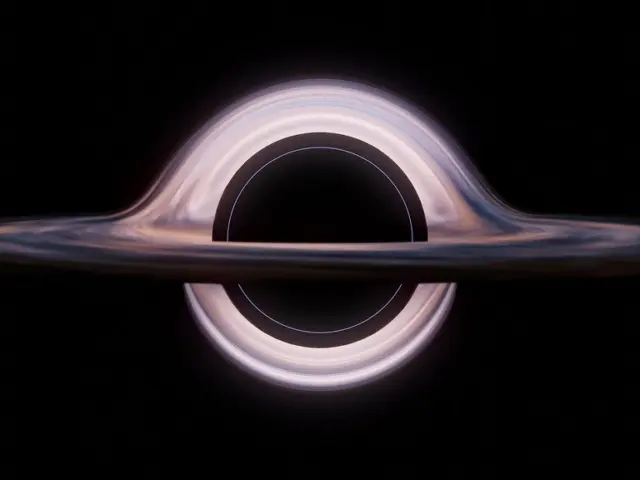
NASA’s tour supplies hostile places that need no invention. On exoplanet HD 189733 b, NASA describes howling winds sending storming glass sideways at 5,400 mph (2 km/s). TrES-2 b is described as less reflective than coal, with a burning atmosphere. The black hole Cygnus X-1 is approximately 6,000 light-years from Earth.
Even the shortest trips outside a craft carry that weight. Leonov’s first spacewalk, on March 18, 1965, lasted only 12 minutes in total, according to the same SYFY Wire article. Fiction stretches that brief exposure into a story, which is why a tether is such a charged image in space horror.

Choosing your first read
- Decide which fear you want: smallness, confinement or the void.
- Start Lovecraft with the earliest title in the table if smallness is your answer.
- Pick Alien if you want a threat that shares your space.
- Pick Event Horizon if you want the outside itself to be the antagonist.
- Open NASA’s tour afterwards if you want to check each fear against real astronomy.
Frequently asked questions
When did Lovecraft die, and how does that fit the stories listed?
He died in Providence on March 15, 1937, as recorded by the H. P. Lovecraft Archive. All five stories in the table were published before that date, between 1926 and 1931.
Is there a recent title that readers shelve as space horror?
Dead Silence, published 2022, has been shelved 71 times as space-horror on Goodreads. It suits readers who want a newer entry after the classics above.
Is cosmic horror the same as isolation horror?
No. Cosmic horror makes a character feel insignificant before something vast. Isolation horror makes a character feel unreachable. A story can use both, but each frightens in a different way.