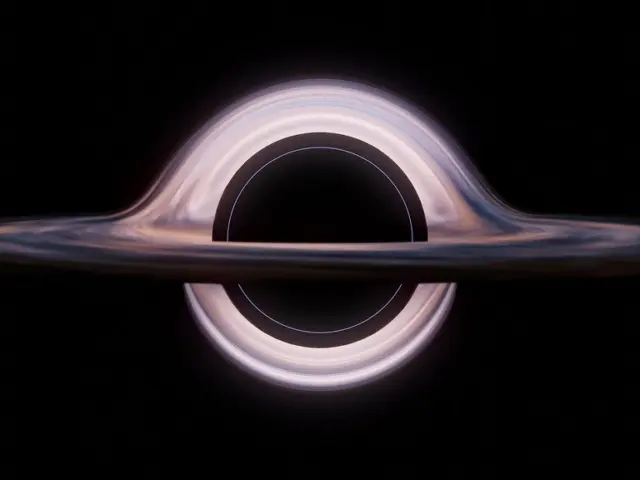
What is a Dyson sphere? It is a hypothetical structure of solar collectors or habitats built around a star. Freeman Dyson’s own version was a loose swarm of independently orbiting objects, not the solid shell familiar from fiction.
Quick answer: the swarm is the best fit if you want the version real astronomers search for. This guide judges each version on three criteria: how closely it matches Dyson’s description, whether it is mechanically workable, and whether it could be detected. Fiction fans will find the shell and ring variants in the same lineup, and the wider genre is covered in our science fiction space mystery stories guide.
Three Dyson sphere versions, from closest to Dyson’s proposal
The versions below are ordered by how faithfully they follow what Dyson wrote, not by how good a story each makes. Facts only justify that one ordering, so treat it as a selection path rather than a league table.
1. The Dyson swarm: what Dyson actually described
Dyson’s description, quoted by Science Springs, is a “loose collection or swarm of objects traveling on independent orbits”, not a solid shell. This is the answer to the Dyson swarm vs Dyson sphere question. The swarm is the original idea, and “sphere” is the popular name that stuck to it.
This version suits readers who want the real-science concept. Its limit is that nobody has a model of what a swarm would look like in practice, so it is a thought experiment and not an engineering plan.

2. The ring of collectors: a stepping stone
The simplest form of a Dyson sphere might begin as a ring of solar power collectors, with later stages described as Dyson rings. A ring is easy to picture and easy to dramatise, which is why it appears so often in stories.
It suits storytellers who want a structure with a visible edge. The catch is Dyson’s own verdict: a solid shell or ring around a star is mechanically impossible. A ring made of separate orbiting collectors is far closer to his swarm than a rigid band is.
3. The solid shell: the fiction favourite
Olaf Stapledon mentioned the idea in his 1937 novel Star Maker, decades before Dyson’s paper. In the popular picture, the structure is a shell of solar collectors or habitats around the star.
The shell suits fiction best, because a continuous surface gives characters somewhere to stand. It is the weakest choice for anyone asking what is physically possible, for the reasons in the next section.
Side-by-side comparison
| Version | Structure | Physical standing | Best suited to |
|---|---|---|---|
| Dyson swarm | Loose collection of objects on independent orbits | Dyson’s own proposal, not a solid body | Readers who want the science |
| Ring of collectors | Ring of solar power collectors, later Dyson rings | A solid ring is called mechanically impossible by Dyson | Stories needing a simple, visible structure |
| Solid shell | Shell of collectors or habitats around the star | Dyson called it mechanically impossible; Maddox called a Dyson sphere physically impossible | Fiction with a continuous inner surface |
The descriptions and verdicts come from Science Springs and the Penn State SETI course.
Is a solid Dyson sphere physically possible?
No. Dyson held that a solid shell or ring surrounding a star is mechanically impossible, and the Penn State SETI course page records that Maddox likewise pointed out that a Dyson sphere is physically impossible.
Two objections are spelled out there. First, a shell kept in orbit at any distance in the Habitable Zone would need some force to hold it, and radiation pressure would have to supply it. Second, building it would take several thousand years. Neither objection touches the swarm, because separate objects on independent orbits do not need to hold a rigid shape.
The practical judgement is that a solid shell works as a setting and fails as a forecast. If a story needs a surface to walk on, the shell is a fair device, but nobody searching the sky is looking for one.
Dyson’s 1960 paper
Physicist and astronomer Freeman Dyson first explored the idea as a thought experiment in 1960. His two-page paper in the journal Science was titled “Search for Artificial Stellar Sources of Infrared Radiation”, as Science Springs notes. The title shows the point of the paper: it was less about building anything than about what a search could find.
Dyson proposed that searching for evidence of such structures might lead to the discovery of advanced civilizations elsewhere in the galaxy. According to the Penn State SETI course, his reasoning was that the structure would block the star’s radiation from outside viewers except in the infrared. He therefore argued for a search for objects with strong infrared emission and not much else.
How astronomers would detect a Dyson sphere
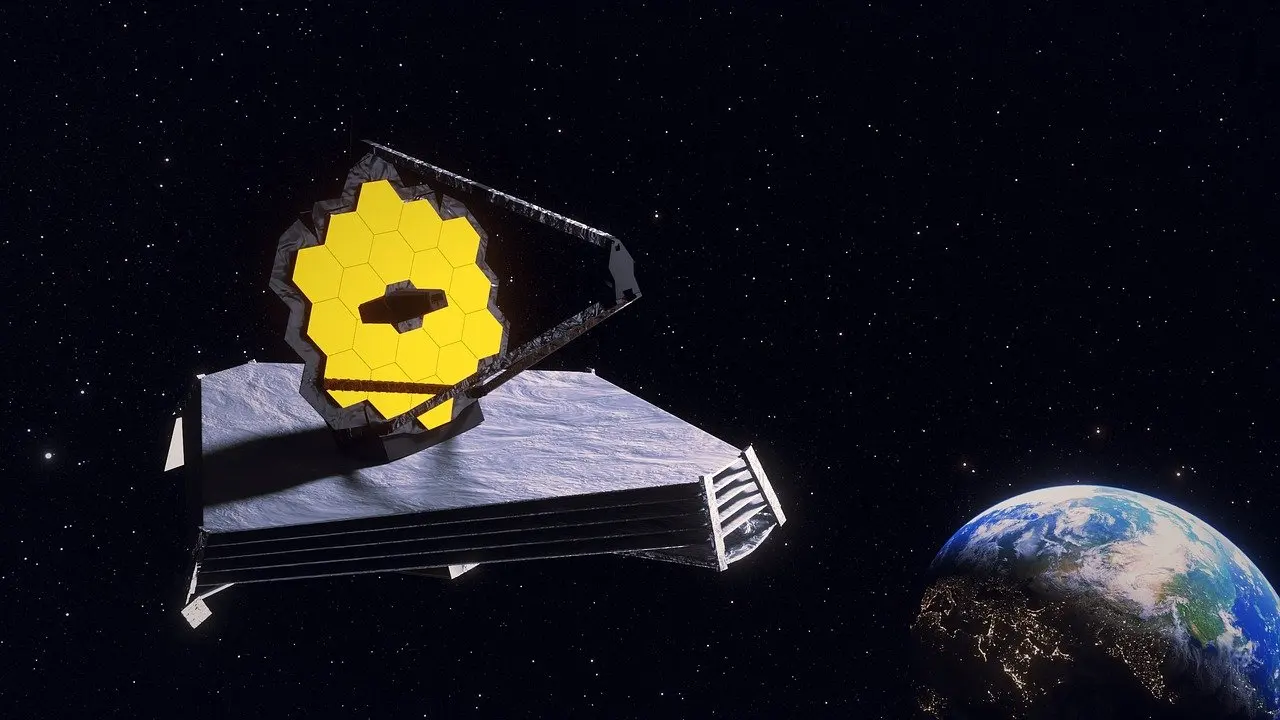
Astronomers would look for waste heat at mid-infrared wavelengths. As Science Times reports, a structure that absorbs starlight must re-emit the energy as heat, and that heat could be picked out in the mid-infrared. That is the real search method behind the fiction, and the reason telescopes feature far more in this field than spacecraft do.
The infrared signature
The target is a star that looks dim in visible light but bright in the infrared. The main difficulty is that there is no underlying theory of what the waste heat would look like, because the materials a builder would use remain unknown. Searchers are therefore matching against a loosely defined signal.

What the surveys have found
Only three all-sky mid-infrared surveys have been conducted: IRAS, WISE and AKARI. Efforts to find waste heat signatures in such data have so far come up empty. For comparison, the swarm and shell versions would both leave the same kind of infrared trace, so a null result does not favour one over the other.
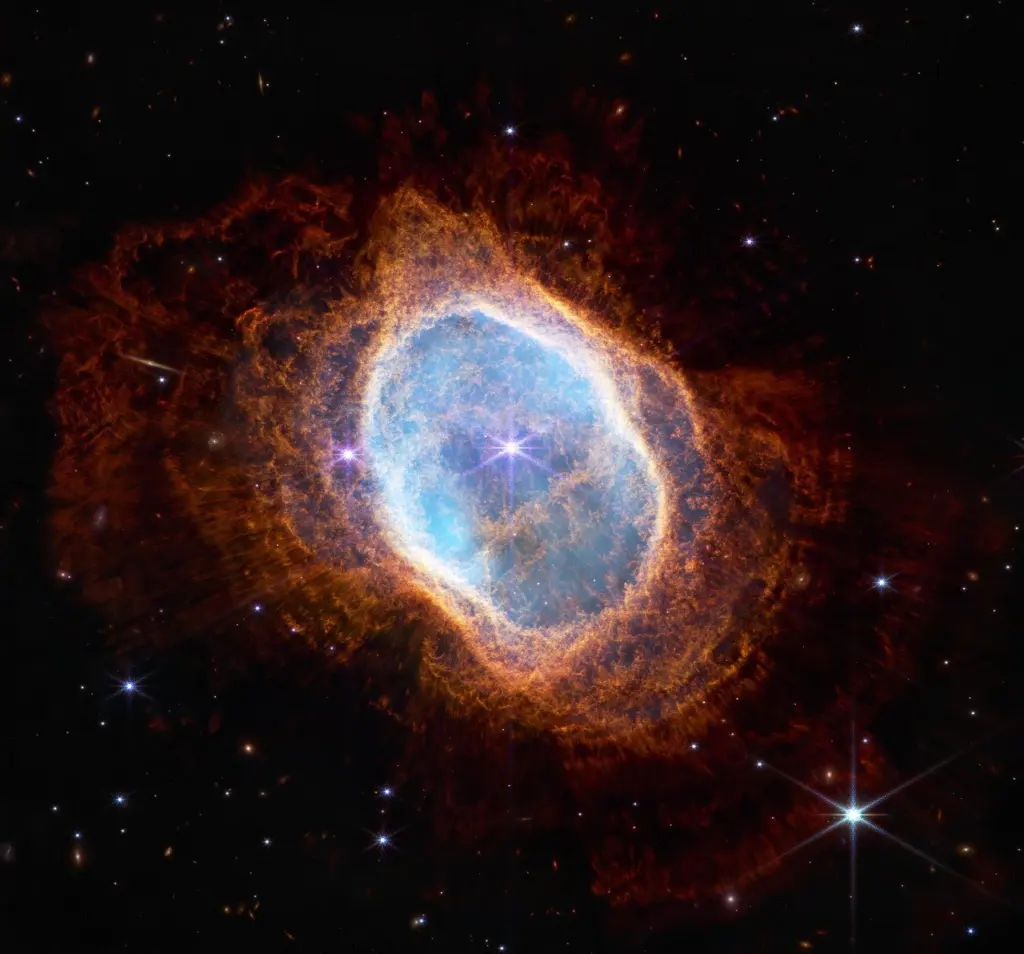
Wright, in the same Science Times report, recommends that SETI researchers refine the search by looking for indications of activity rather than relying on heat signatures alone. That advice is a sensible reading of the situation: a heat excess on its own is ambiguous, so corroborating signs are worth more than a bigger infrared catalogue.

Tabby’s Star and the Dyson sphere idea
KIC 8462852, nicknamed Tabby’s Star after its discoverer Tabetha Boyajian, is the best-known case where a Dyson structure was floated as an explanation. Its strange light was originally thought to indicate a possible Dyson sphere, but that idea has since been discarded, according to Science Springs.
The episode is a useful lesson in how to read such claims. A dimming star is a puzzle first and a candidate megastructure only if every natural explanation fails. Readers who enjoy this kind of open question will find more cases in our list of unexplained space phenomena.
Dyson spheres are one large-scale answer to humanity’s energy and living-space problems in fiction. For a different large-scale answer to the problem of living among the stars, see generation ship science fiction.
Frequently asked questions
Who first imagined a structure like this?
Olaf Stapledon mentioned the idea in his 1937 novel Star Maker. Freeman Dyson then explored it as a thought experiment in 1960, which is why his name is attached to it.
How big would a Dyson sphere be?
One description from Science Springs puts it at about the size of Earth’s orbit, roughly 93 million miles from the Sun. That is an illustrative example rather than a fixed requirement.
What is the Landsberg Limit?
It is a concept representing the theoretical efficiency limit for harvesting solar radiation, and it features in Wright’s work on Dyson spheres, as Science Times reports.
Has anyone proposed using a space mission to search for one?
Yes. In 2018, scientists began speaking of using the European Space Agency’s Gaia mission to seek Dyson spheres, according to Science Springs.