| Film feature | What the physics and real imagery suggest | Planning use |
|---|---|---|
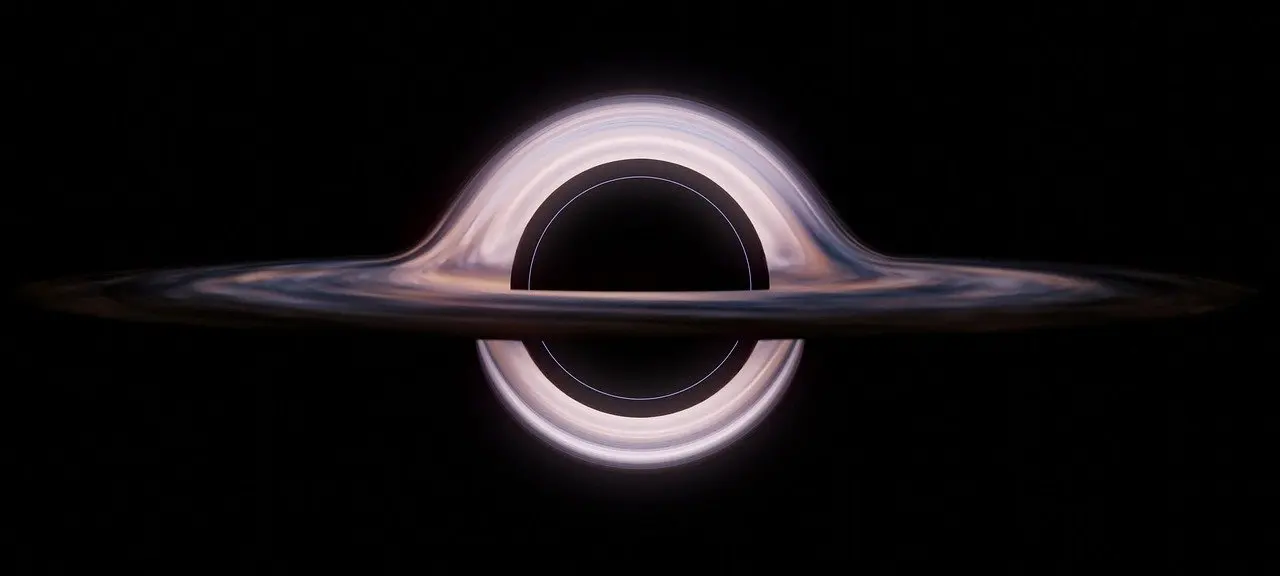
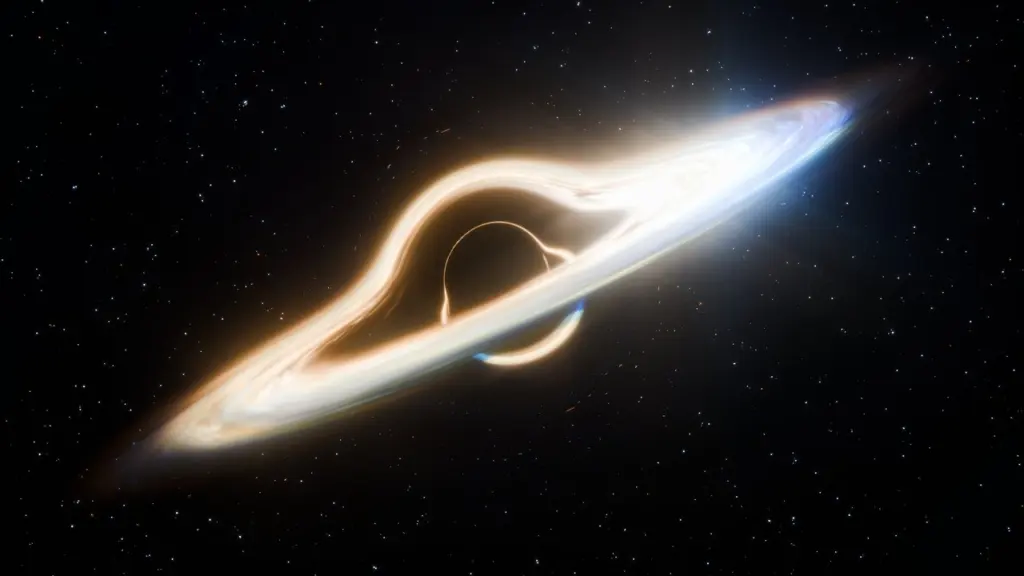
| Overall look of Gargantua | Brighter and more symmetric than the 2019 Event Horizon Telescope image | Treat it as an informed artistic rendering, not a photograph of a real object. |
| Disk brightness | The approaching and receding sides of the disk appear reversed; Doppler effects were toned down | Do not use the film to predict what a real black hole image looks like. |
| Radiation | X-rays and gamma rays shown as visible light | Read the glow as a storytelling choice that keeps the crew alive on screen. |
| Size | Depicted as 100 million times larger than the Sun | Quote it as the film’s stated scale rather than a measured value. |
| Time | Time moves slower in higher gravity fields | Trust the direction of the effect; check the film’s extreme example separately. |
Comparisons above draw on Screen Rant’s accuracy review of the film and the Steamology Project’s account of how the black hole was made.
So, how accurate is Interstellar black hole Gargantua? Its geometry follows real relativity equations, but the film brightened and simplified the look, so treat it as a close artistic rendering rather than an observation.
If you enjoy this kind of fact-versus-fiction check, our science fiction space mystery stories hub collects more of it.
What the film got right
Gargantua was not painted by hand. According to a review of the film’s science, the team fed Einstein’s general relativity equations into a custom rendering engine, so the bending of light came from the maths rather than from an artist’s guess.

The scale of the work backs that up. Universe Today reports that physicist Kip Thorne produced an entirely new set of equations that guided the rendering software, and that the images came after a year of work by 30 people and thousands of computers. The Steamology Project adds that Gargantua alone took more than 100 hours to render.
Thorne described the renders as his observational data, which shows how seriously the physics side treated them. The same report notes a finding that came out of the process: warping space around the black hole also warps the accretion disk, producing the halo-like bending of the disk in the images.
Where drama won over physics
The film’s accuracy is real but selective. The choices below are the places where visual clarity took priority, and they matter if you want to use the movie as a teaching aid.
- Reversed brightness. Screen Rant notes that the film’s black hole appears to reverse the brightness difference between the approaching and receding sides of the disk. A real image would not look like the film in this respect.
- Muted Doppler effects. These effects were toned down so the black hole would not confuse the audience. The result is a calmer, more balanced disk than the physics would produce.
- Brighter and more symmetric. The Steamology Project describes the final rendering as a more artistic, brighter and more symmetric picture than the real 2019 image.
- Visible light for deadly rays. X-rays and gamma rays were shown as visible light so the astronauts could survive on screen.
Use these four points as a checklist when someone claims the film shows exactly what a black hole looks like. The geometry is trustworthy; the lighting is a design decision.
What real black hole images showed
The Event Horizon Telescope image arrived in 2019, five years after the film, and Screen Rant says the movie’s visuals resembled those real photographs. The Steamology Project goes further and calls the 2019 image one of the closest real versions of Gargantua.
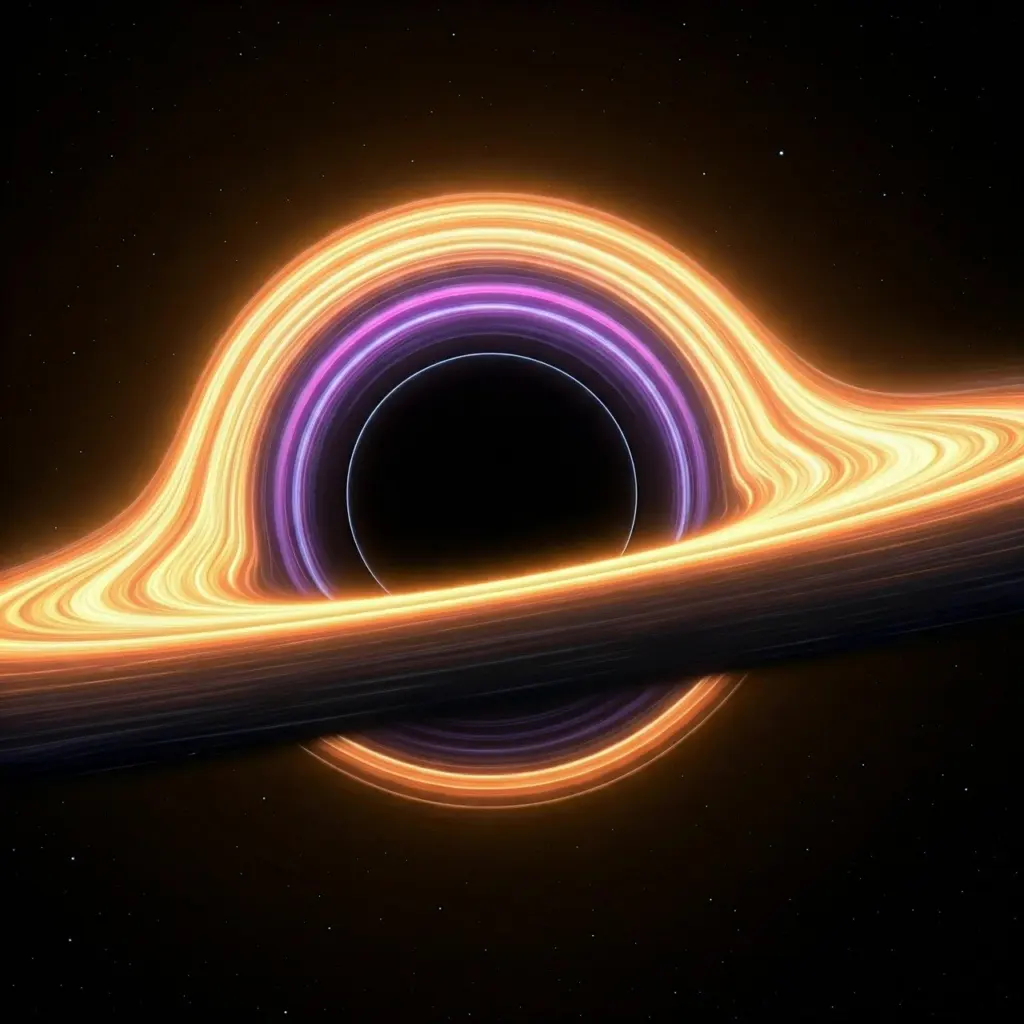
That ordering is the most interesting part of the comparison. The filmmakers rendered the effect from equations before any telescope had imaged one, and observation then landed close to their picture. The differences listed above are the gap that remains.
For a fair comparison, put the two images side by side and look at three things: whether a bright ring surrounds a dark centre, whether one side of the disk is brighter than the other, and how symmetric the glow is. The first matches well; the second and third are where the film departs from reality.
Time dilation near a black hole
The core idea holds up. Screen Rant explains that general relativity suggests time moves slower in higher gravity fields, and a black hole’s gravity is about as strong as nature gets.
The film’s most famous scene pushes this to an extreme: one hour on the planet near Gargantua equals seven years back on Earth. The same review notes that a static black hole would not allow stable orbits this close. In the film the black hole spins at nearly the speed of light, which is what makes such a close orbit plausible, per Universe Today.

- Use the effect as a concept. Slower time in stronger gravity is genuine relativity and a sound teaching hook.
- Treat the one-hour figure as the film’s scenario. It depends on the spin and orbit the story chose, not on a rule that applies near every black hole.
- Check the spin assumption. The close orbit only works because the black hole is spinning fast; a non-spinning one would not allow it.
Using the film as a guide
Interstellar works best as a conversation starter: the physics team’s rendering was careful, and the departures were deliberate. If you want other stories where science and speculation meet, try our look at the unsolved mysteries of the moon or the abandoned spaceship mystery stories.
Frequently asked questions
Who advised the filmmakers on the physics?
Kip Thorne served as the film’s official science consultant and an executive producer, according to Screen Rant. He later received the 2017 Nobel Prize for Physics for his research on gravitational waves.
How big and how fast is Gargantua in the film?
The film depicts it as 100 million times larger than the Sun, per Screen Rant. Universe Today notes that the black hole appears to spin at nearly the speed of light.
Did making the film lead to new science?
Yes. Universe Today reports that the rendering work produced new equations and the discovery that warped space also warps the accretion disk, and that Thorne expected at least two published articles from it.