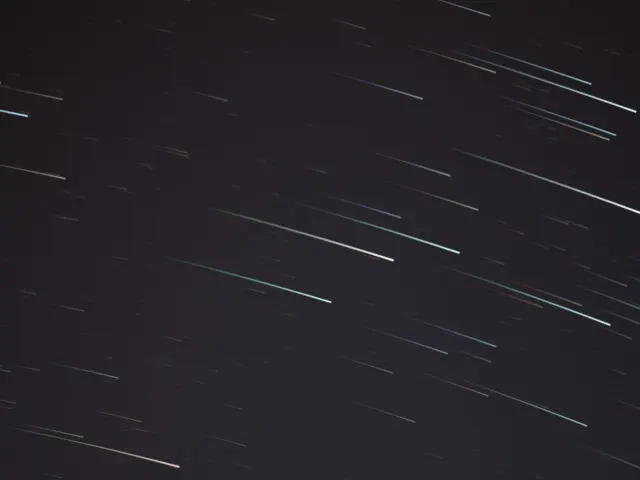
Someone mentions DUST and you ask: what was the DUST alternate reality game? It was a seven-week online mystery for teenagers, run in spring 2015, that mixed a story with real science.
This overview sits inside the dust alternate reality game hub, which covers the wider DUST ARG space mystery. If you want the mechanics, read how to play the DUST ARG. Here the aim is simpler: clear up what the game was, who it was for and why its science mattered.
An ARG is not a video game
The first misunderstanding is filing DUST next to console or phone games. NASA describes alternate reality games as interactive networked stories that use the real world as a backdrop. The story is delivered in pieces, and players move it forward by working things out rather than steering a character around a screen.
A reference-style explainer on the genre adds two useful points. ARGs are transmedia experiences, meaning they take place over multiple mediums. Instead of controlling an avatar, players affect the story as characters themselves. In DUST, NASA’s release says players signed onto a website to interact directly with characters in the game, alongside other media such as social apps, email and phones.
That structure is why puzzle types such as ciphers appear in ARGs at all. A cipher is not a level to beat. It is a way of making players do something with the information the story hands them. It also explains why these games tend to gather communities, since the same explainer notes that players often pool their collective findings.
DUST against common assumptions
Five assumptions come up repeatedly when people first hear about the game. Each has a short, source-backed correction.
| Common assumption | What DUST was | What it tells you |
|---|---|---|
| It was a game you could binge in one sitting | New parts of the story and science clues arrived two to three times a week | The pace was set by the organisers, so progress depended on checking back and on the group |
| It was for adult puzzle fans | The primary audience was teenagers aged 13-17 | Clues and tasks were pitched at young players, not at veteran puzzle hunters |
| The story had a scripted ending | NASA states there were no fixed outcomes | Player input shaped the story, so no single walkthrough could describe it |
| The science was decoration | Each scenario included activities that support Next Generation Science Standards | The science was part of the tasks, not just the setting |
| It is a long-running game | It ran throughout spring 2015, with seven weeks of play | The live run was a time-limited event |
The descriptions come from NASA’s release on the game and the University of Maryland’s HCIL project page.
Real science, not just backdrop
The premise is easy to summarise without spoiling anything. According to NASA, adults worldwide fall unconscious because of mysterious dust from a meteor shower, and the University of Maryland team says the story follows a group of diverse young people visiting a NASA research facility. The interest for readers is what players were asked to do inside that frame.
- Meteor evidence. Players analyzed data to find the source of the meteor, which turned the meteorite at the centre of the story into something to investigate rather than just a plot device.
- Cipher and decoding work. One documented puzzle involved decrypting a message contained in alien DNA, a clear example of a cipher serving the science theme.
- Phone-based scans. Throughout the game, players were asked to take scans of collapsed adults using a mobile app, which tied the online story to hands-on data gathering.
- Real professional roles. The project team says its ARGs inspire players to take on the roles of real-life scientists, engineers and programmers.
The judgement that follows is a simple one. A puzzle that asks you to analyze data or decode a message is a better vehicle for science than a quiz, because players do the reasoning themselves. That is also why the game mattered beyond entertainment: its tasks were built to support recognised science standards.
A teenage audience and a working community
DUST was designed for young people. The University of Maryland team names teenagers aged 13-17 as the primary audience, and NASA says the project was trying to encourage teens, especially girls and minorities, to get excited about science. Teen co-designers and beta testers from D.C. and Provo schools helped test the game before it ran, so the audience also shaped the design.

The second misunderstanding is that an ARG is a solo puzzle. NASA says DUST players worked as a community to add their own input, guide the action and do research. That makes it closer to a group project than a quiz. Different players could take on different tasks, from analysing data to checking details, and then bring results back to the shared story.
The practical lesson for anyone curious about the genre is that the community is part of the design, not an extra. The next question is what is left to see now that the live event has ended.

What remains of the game today
The original run has finished, so the live story cannot be joined as it was in spring 2015. The University of Maryland team says it developed a replayable version of DUST that may be used in educational settings such as schools, museums and libraries. For teachers and group leaders, that project page is the place to start.
Readers who want context rather than a replay can see how the game sits among similar projects in DUST ARG vs other alternate reality games.
Frequently asked questions
| Question | Answer |
|---|---|
| Who developed DUST? | According to NASA, Brigham Young University in Provo, Utah, the University of Maryland and Tinder Transmedia developed it, with NASA help. |
| How was DUST funded, and was it the only game? | It was part of a $2-million National Science Foundation Advancing Informal STEM Learning grant. NASA describes it as the first of two games being developed under that grant. |
| What is a rabbit hole in an ARG? | It is the entry point that usually starts an ARG, and it might be an obscure link that draws players into the story. |